

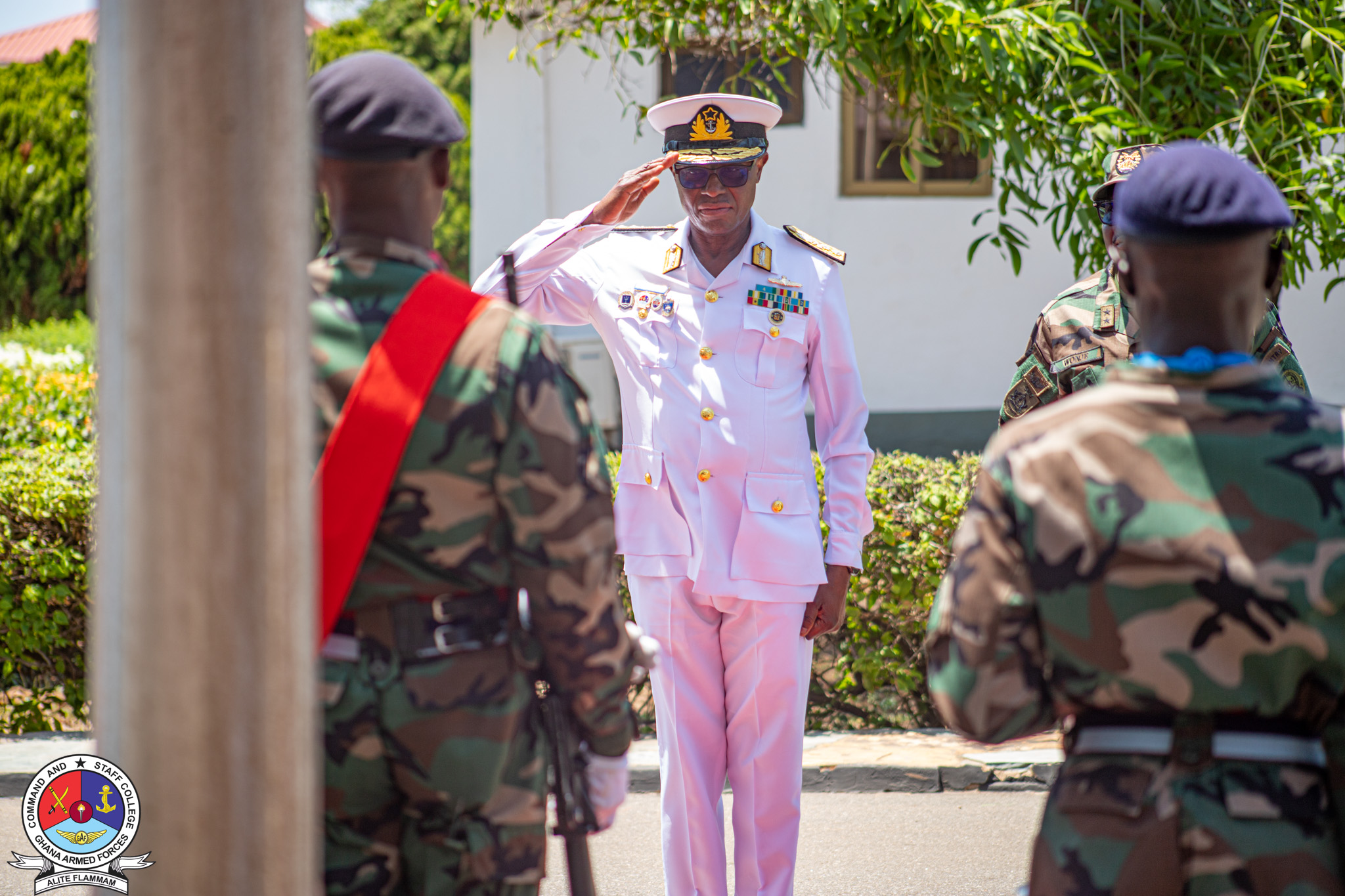
The Chief of the Naval Staff (CNS), Rear Admiral Godwin Livinus Bessing, has outlined his vision to modernise the Ghana Navy by 2030 to participants of the Ghana Armed Forces Command and Staff College (GAFCSC) Senior Command and Staff Course (SCSC) 48 at Hamidu Hall on Monday, 19 October 2026, as part of the week-long Maritime Combat Power Week.
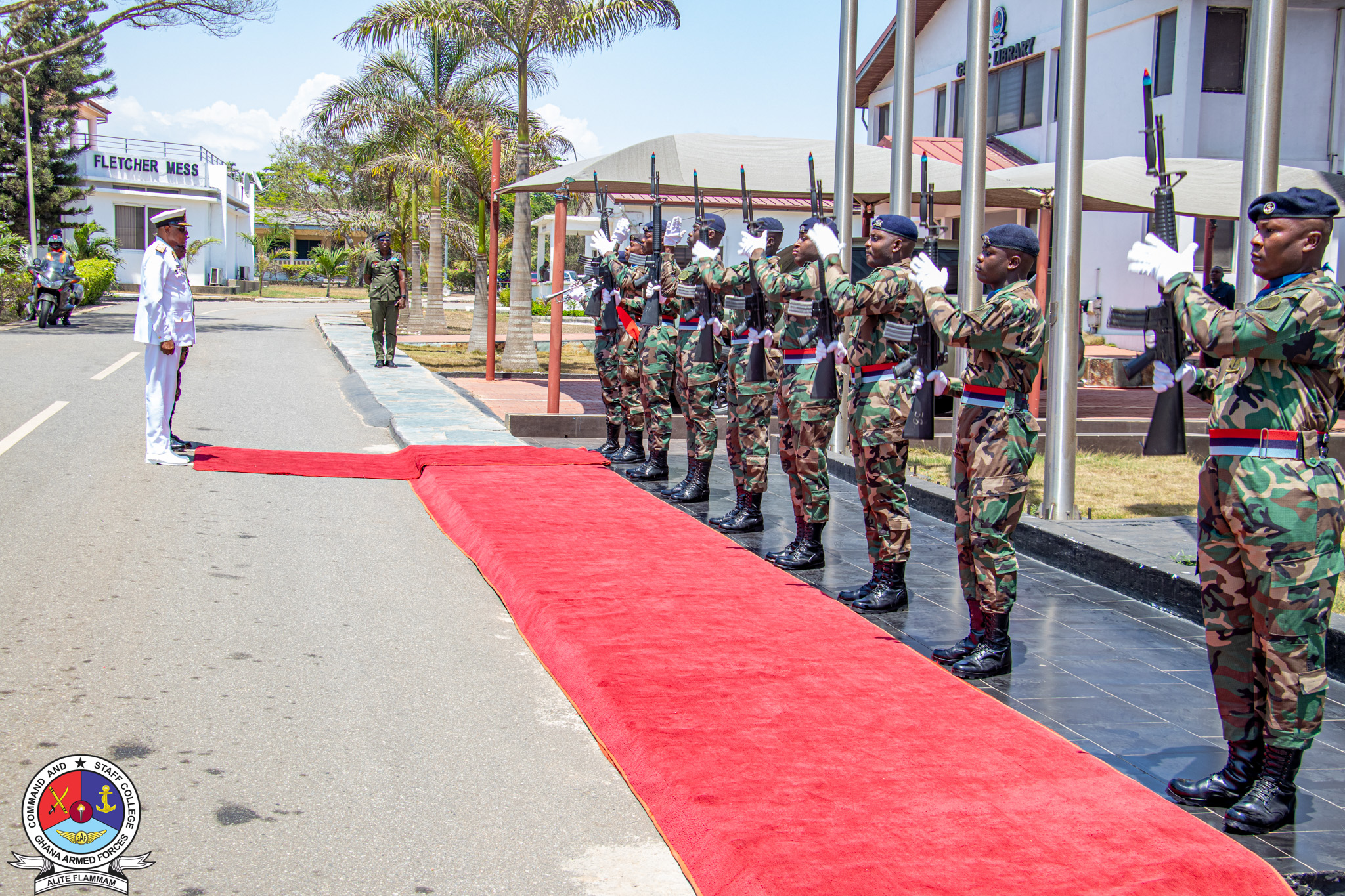
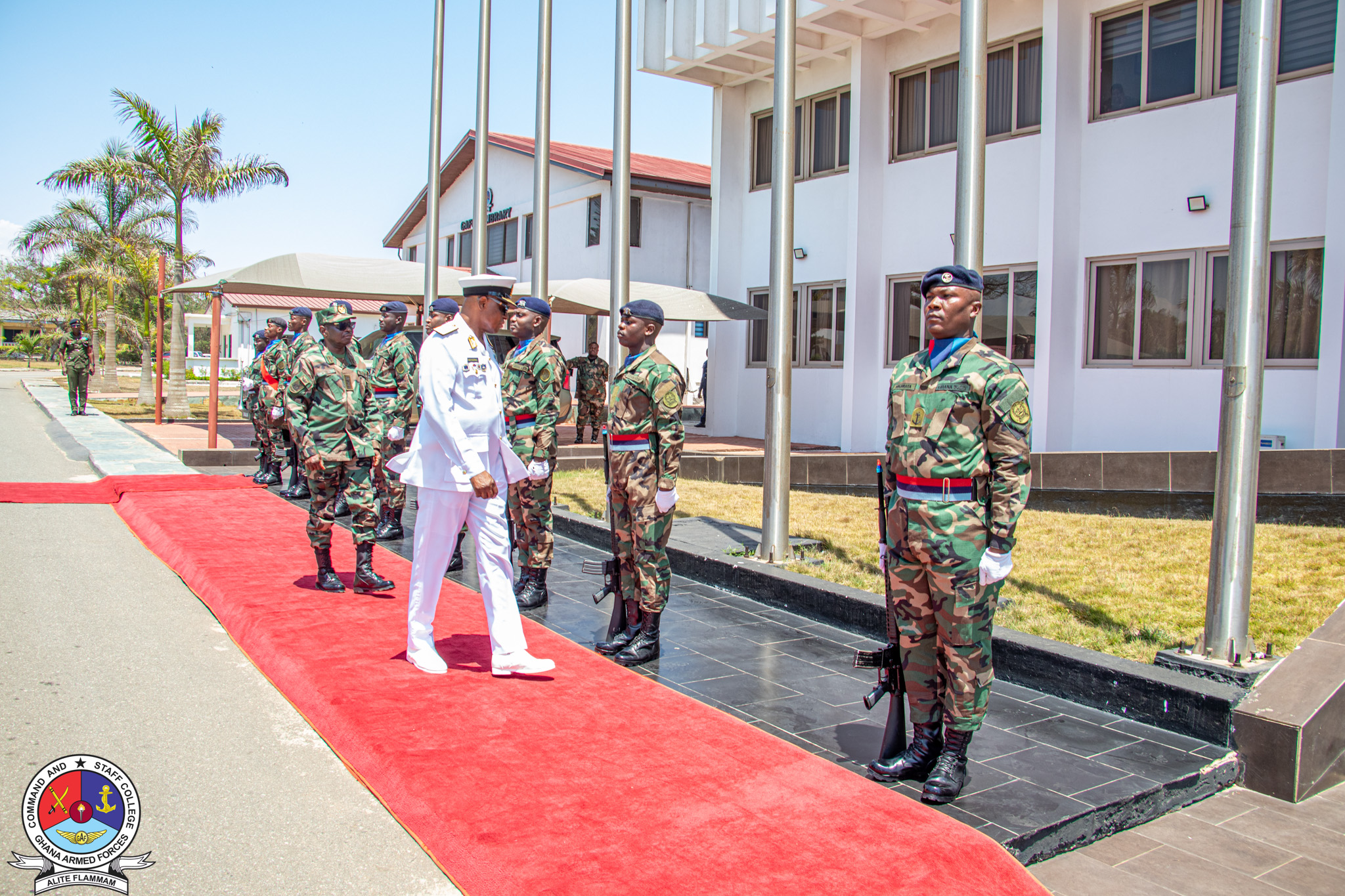
The lecture aimed to highlight progress towards building a resilient, adaptive and globally responsive Navy capable of safeguarding Ghana's maritime interests and contributing to national, regional and international maritime security.
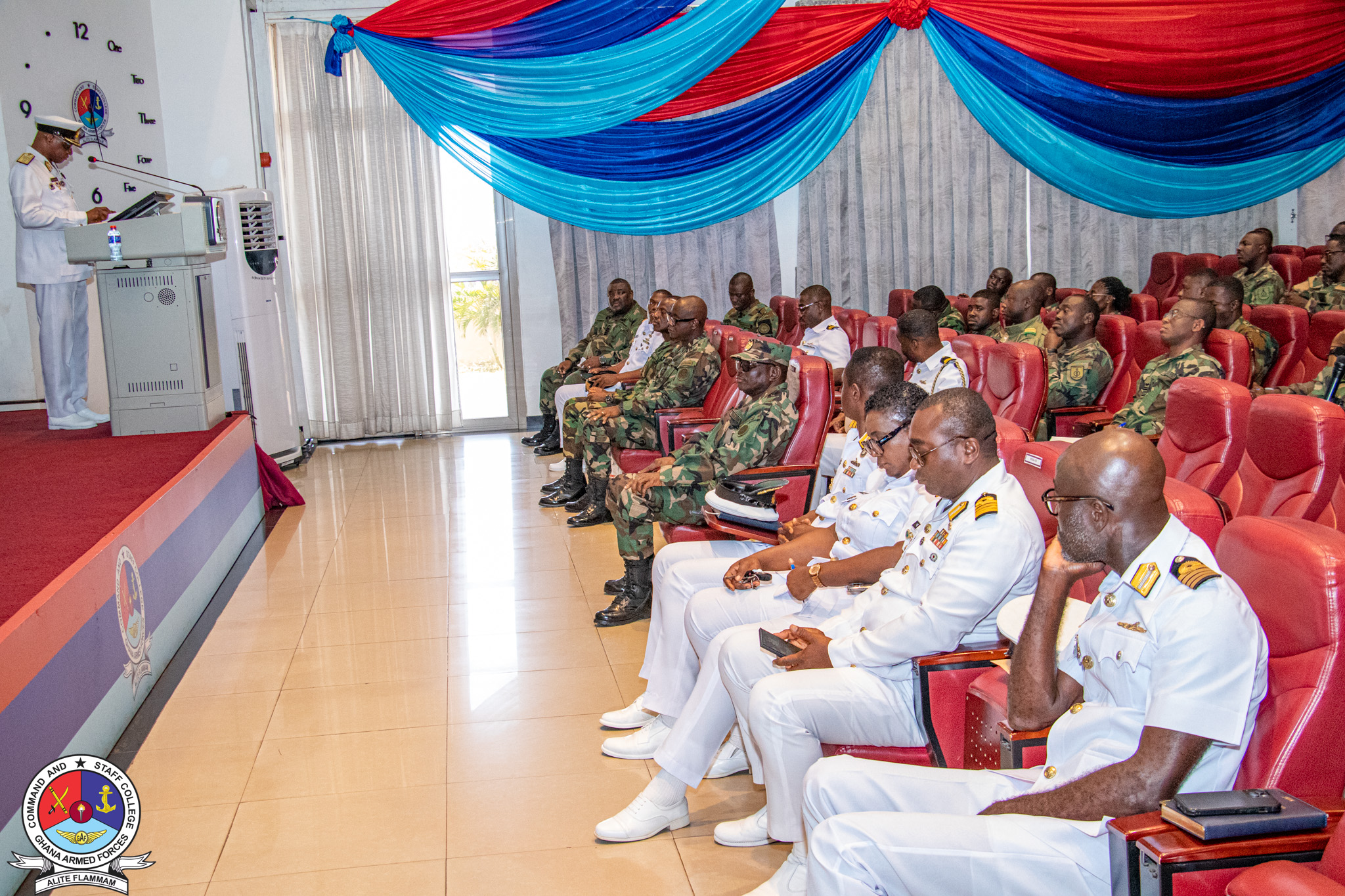
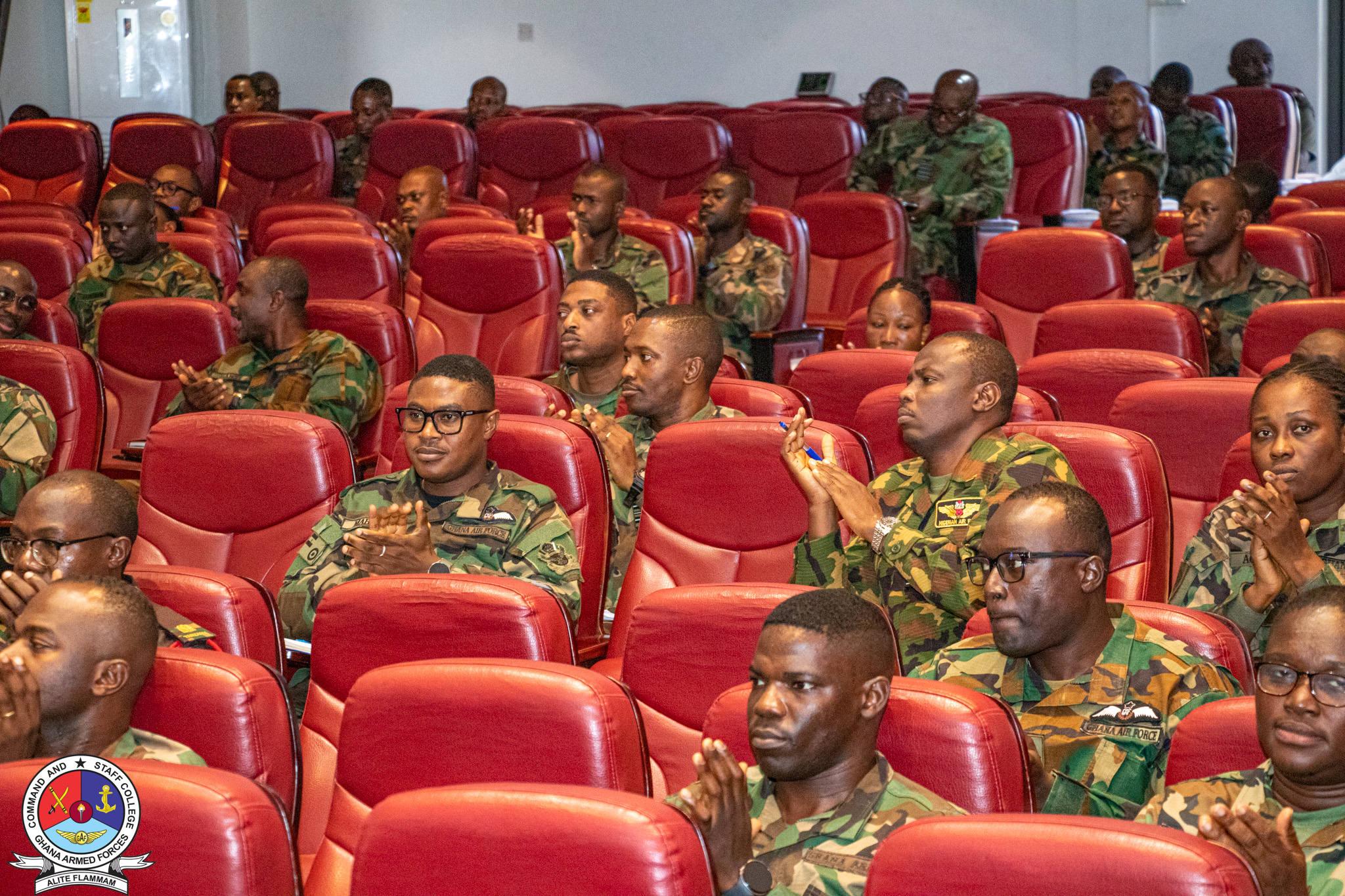
Rear Admiral Bessing identified narcotics trafficking, weapons smuggling, illegal bunkering, human trafficking, armed robbery at sea and illegal fishing as major threats. He disclosed that more than 60 per cent of the Navy's fleet was dedicated to offshore oil and gas security, limiting the vessels available for other operations. To address these challenges, he outlined plans to acquire two 72-metre offshore patrol vessels, an additional fisheries patrol vessel, a fast attack craft and six V-BAT unmanned aerial systems (UAS). The offshore security vessel Ghana Naval Ship (GNS) Tema was nearing completion, while the National Maritime Surveillance Network was being upgraded to integrate radar, satellite imagery and vessel tracking, with completion expected in the first quarter of 2027. Plans to acquire 30 riverine boats and develop the Special Boats Squadron would also strengthen operations against illegal mining, smuggling and other threats along inland waterways.
The CNS further highlighted efforts to improve hydrographic services, naval infrastructure and operational presence. These included the rehabilitation of the JAK Adiku slipway, negotiations with Nautic Watch Limited for a proposed public-private partnership (PPP) to modernise the Naval Shipyard, and the establishment of Naval Base Ezinlibo to enhance security in the Western Corridor. Additional forward operating locations were also being planned to improve coastal surveillance, logistics and response times.
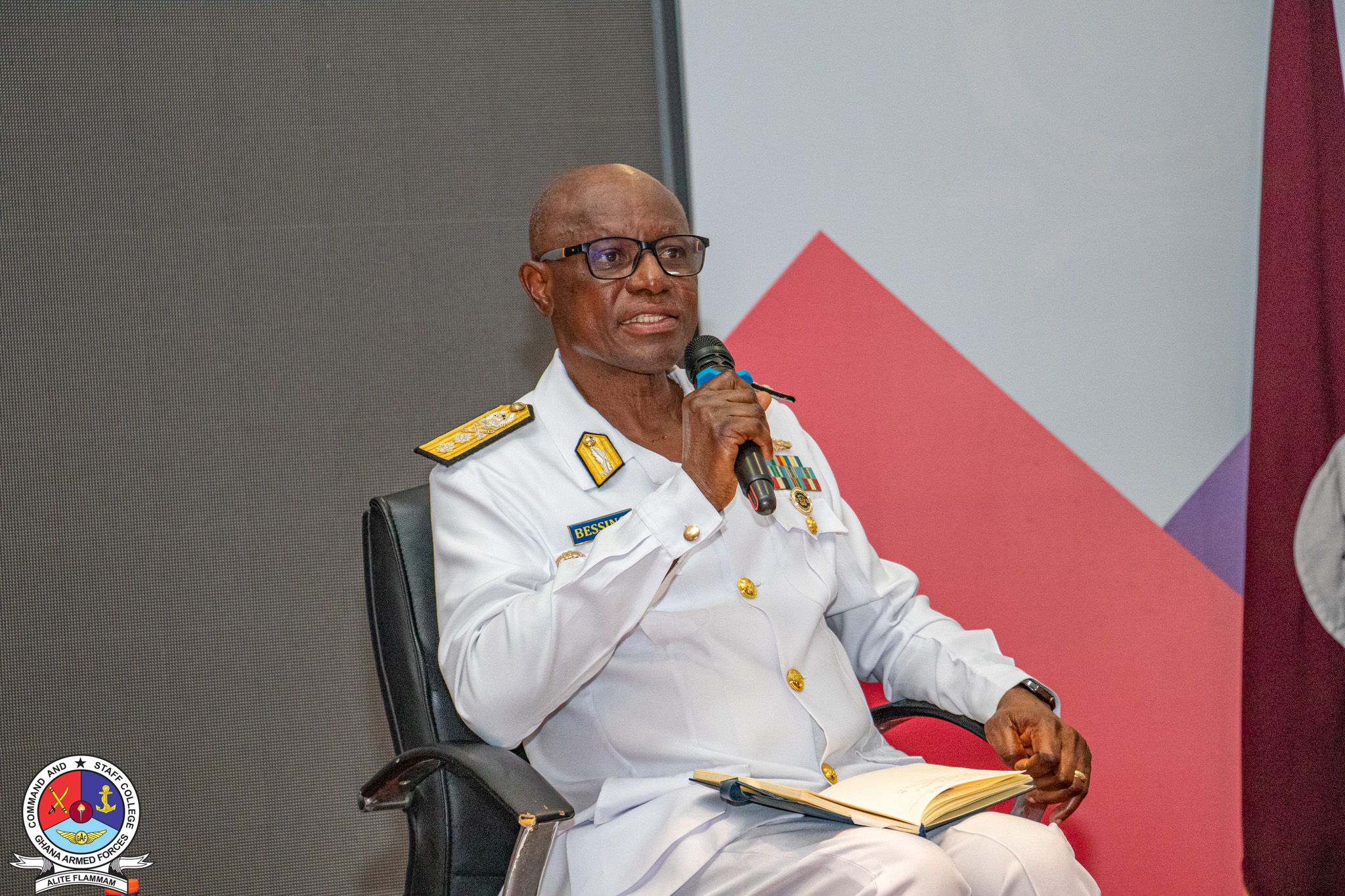
On personnel development, Rear Admiral Bessing said the Navy had spent more than US$400,000 from internally generated funds on overseas training allowances between January and October 2026, supporting 105 officers and 62 ratings. He added that the Naval Training Command was being developed into a centre of excellence, with projects including a 42-unit accommodation facility and an Olympic-size swimming pool. Plans were also underway to establish a Navigation and Direction School with support from the Indian Navy Mobile Training Team to expand local training opportunities.
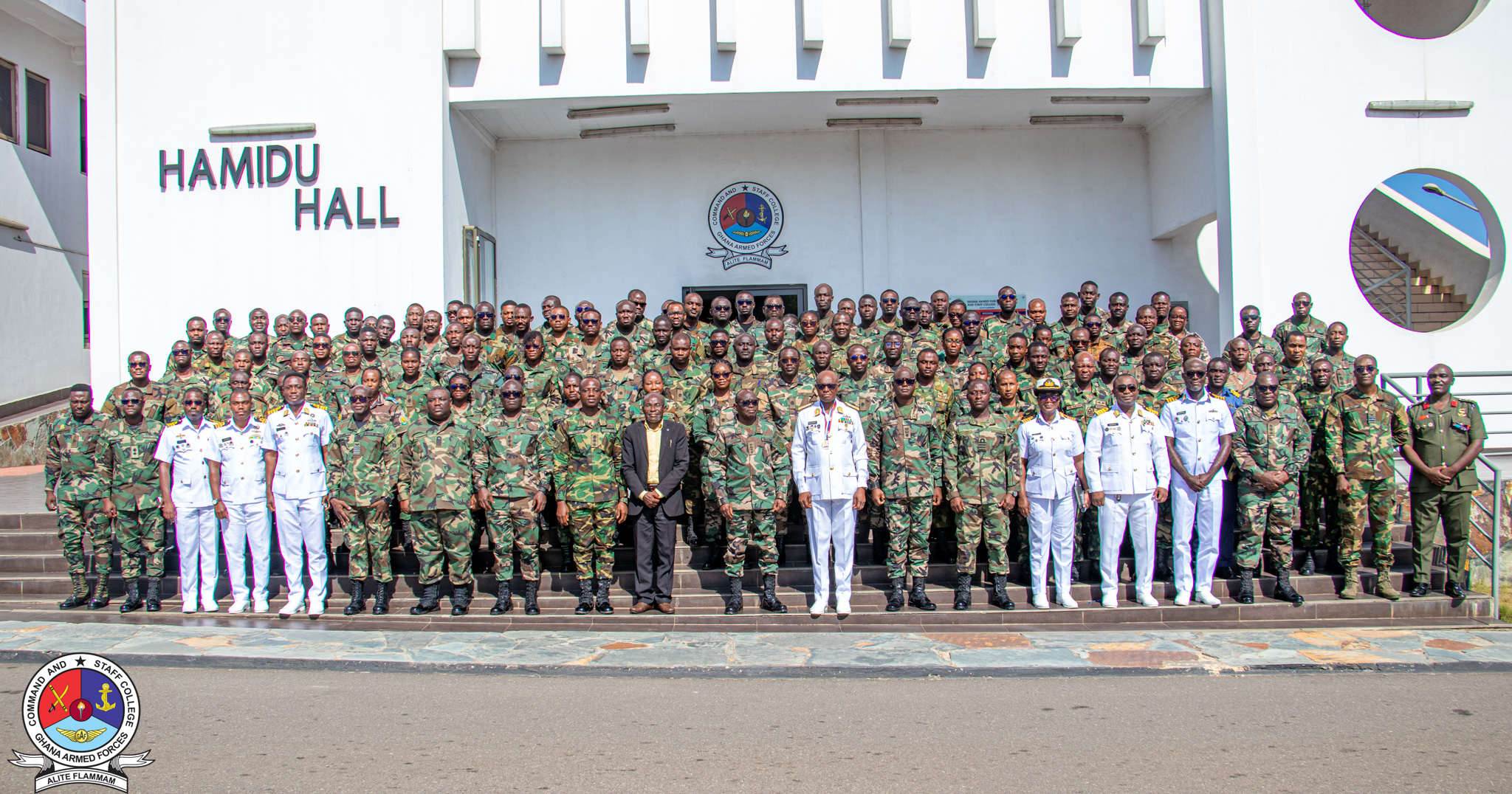
Rear Admiral Bessing reiterated that achieving the Navy's 2030 vision would require sustained investment, professional personnel and stronger cooperation among relevant national agencies and international partners to address emerging maritime threats. He noted that the success of the modernisation agenda would ultimately be measured by the Navy's ability to protect maritime trade and offshore infrastructure, improve safety for fishing communities and respond effectively to incidents at sea. Following his presentation, participants engaged him in a question and answer session, after which he was presented with a plaque in appreciation of his lecture and for sharing his vision for the Ghana Navy.
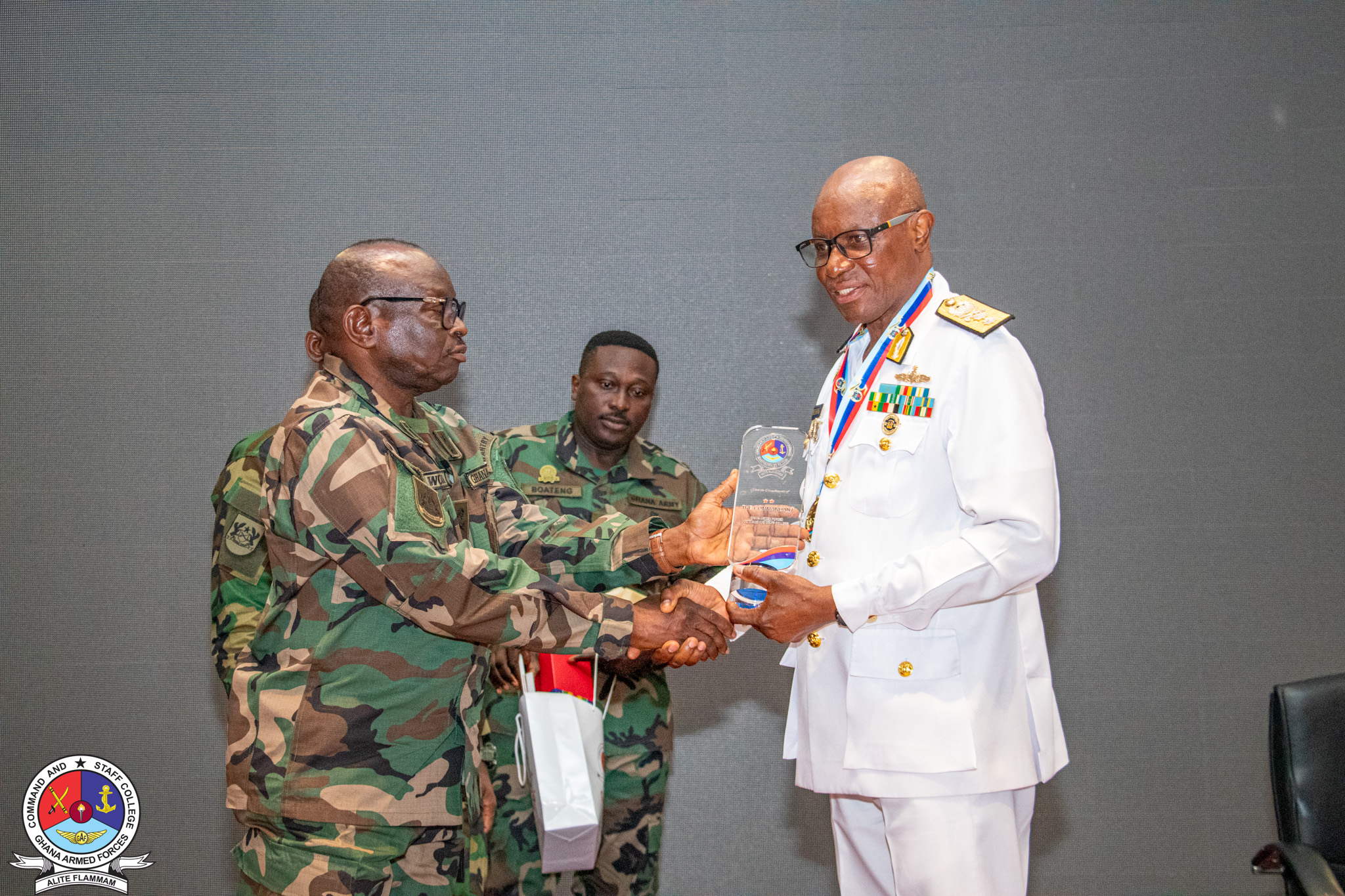
As a sign of appreciation, the Commandant of GAFCSC, Major General Jackson Wonje, presented a plaque and a commemorative neck medal to the Chief of the Naval Staff, Rear Admiral Godwin Livinus Bessing, for sharing his vision for the Ghana Navy with participation.
By Cpl Dakudji O Majorie